

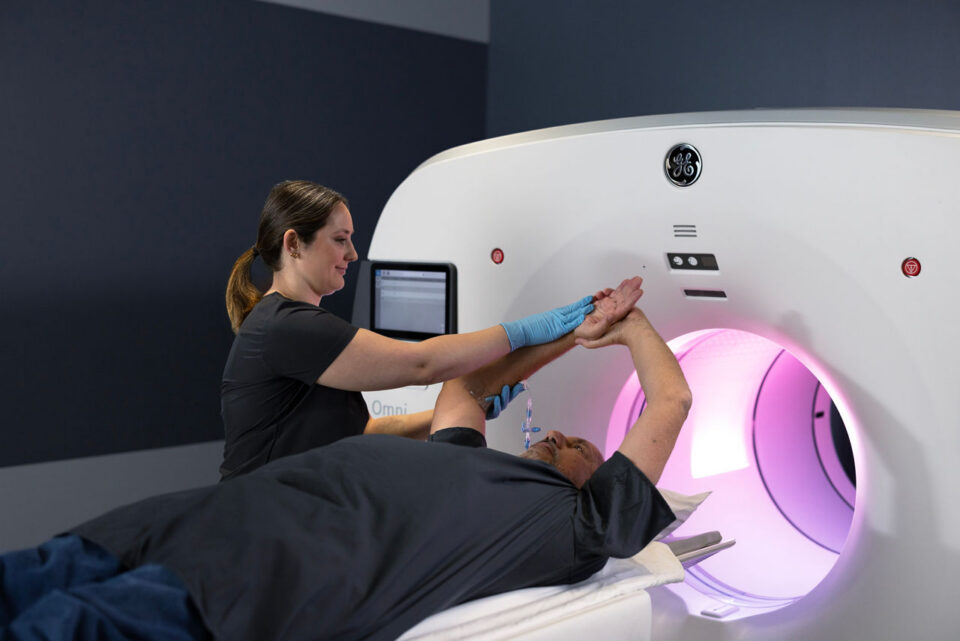
Advances in nuclear medicine are bringing together radioactive tracers, molecular imaging, radiopharmaceuticals and increasingly sophisticated technologies to improve the diagnosis, monitoring and treatment of complex diseases.
Nuclear medicine is entering a period of rapid technological development as healthcare systems look for more precise ways to understand disease and tailor treatment to individual patients.
Unlike conventional imaging, which primarily shows the structure of organs and tissues, nuclear medicine can provide information about biological activity inside the body. By using small amounts of radioactive tracers alongside specialised imaging systems, clinicians can observe molecular and physiological processes that may help identify disease and assess how it is progressing.
These capabilities are being applied across a growing range of medical conditions, including cancer, cardiovascular disease and neurological disorders such as dementia and Alzheimer’s disease.
From radiotracers to molecular imaging
The foundations of nuclear medicine were established through early experiments using radioactive substances as tracers to study processes inside the human body.
Over the decades, advances in radioisotopes, imaging equipment and computer technology have transformed the field.
Modern systems such as single-photon emission computed tomography (SPECT) and positron emission tomography (PET) use radiotracers to generate detailed information about biological activity.
The development of hybrid imaging has taken this further. Technologies such as PET/CT and SPECT/CT combine functional information from nuclear medicine with the anatomical detail provided by computed tomography.
This allows clinicians to see not only where an abnormality is located, but also gain insight into how it is behaving.
Understanding disease at the molecular level
One of the major advantages of nuclear medicine is its ability to reveal biological processes that may not be visible through structural imaging alone.
Radioactive isotopes can be incorporated into targeted tracers that interact with specific biological processes. Once inside the body, the signals produced by these tracers can be detected by specialised imaging systems.
This can provide clinicians with information that supports diagnosis, disease staging and treatment monitoring.
For cancer care, for example, molecular imaging can help identify areas of disease and assess how a patient is responding to treatment.
Similar approaches are being investigated and applied in cardiovascular and neurological medicine, where understanding changes in biological function can provide valuable information alongside conventional diagnostic methods.
The rise of theranostics
One of the most significant developments in nuclear medicine is theranostics, a combination of therapy and diagnostics.
The approach uses molecular targets to help identify disease and, in appropriate cases, deliver targeted treatment.
This creates a closer connection between diagnosis and therapy. Instead of relying solely on anatomical information, clinicians can use molecular imaging to help determine whether a particular biological target is present and whether a targeted treatment may be appropriate.
Theranostics is particularly important in oncology, where radiopharmaceuticals can be designed to target specific characteristics of cancer cells.
The development of integrated workflows combining radiopharmaceuticals, molecular imaging and digital analysis is helping advance this approach.
AI and advanced imaging
Artificial intelligence is also becoming increasingly relevant to nuclear medicine.
AI-enabled software can support image reconstruction, image analysis and workflow optimisation. Advanced systems are being developed to help clinicians process increasingly complex imaging data and extract useful information more efficiently.
Modern nuclear medicine systems can incorporate advanced detector technologies and AI-supported image reconstruction to improve image quality and support quantitative analysis.
The combination of molecular imaging and AI could ultimately allow healthcare professionals to extract more information from diagnostic scans while helping streamline clinical workflows.
However, AI is intended to support clinical decision-making rather than replace medical expertise. The interpretation of imaging results remains dependent on trained healthcare professionals and the wider clinical context.
A more personalised approach to care
The ability to visualise biological processes is helping move healthcare towards more personalised treatment strategies.
Every patient can respond differently to a disease or therapy. Molecular imaging can provide additional information that may help clinicians determine the characteristics of a disease, monitor changes over time and evaluate treatment response.
This is particularly valuable for complex diseases that require repeated assessment.
Advances in PET/CT, SPECT/CT, radiopharmaceuticals and quantitative imaging are therefore helping expand the role of nuclear medicine beyond traditional diagnosis.
Expanding access to nuclear medicine
The technological progress in nuclear medicine also raises an important question: how can these capabilities become more accessible?
Advanced imaging equipment, specialised radiopharmaceuticals, trained personnel and supporting infrastructure can be expensive and complex to establish.
For healthcare systems in Africa and other emerging markets, expanding nuclear medicine will require investment not only in equipment but also in radiopharmaceutical supply chains, specialist skills, maintenance capabilities and appropriate clinical infrastructure.
At the same time, advances that improve workflow efficiency and simplify imaging processes could help make sophisticated nuclear medicine services more scalable.
The future of precision healthcare
Nuclear medicine is evolving from a technology focused primarily on detecting abnormalities into a broader platform for understanding disease biology, guiding treatment and monitoring patient response.
The combination of radiopharmaceuticals, PET and SPECT imaging, advanced detectors, artificial intelligence and theranostics is creating new possibilities for precision medicine.
The direction of travel is clear: healthcare is increasingly moving towards treatments and diagnostic strategies designed around the biology of individual patients.
As these technologies continue to develop, nuclear medicine could play an increasingly important role in helping clinicians detect disease earlier, understand it more precisely and select treatments more effectively.
The challenge will be ensuring that these advances translate into accessible, affordable and clinically useful solutions for patients—not only in highly developed healthcare systems, but across the wider global health landscape.
